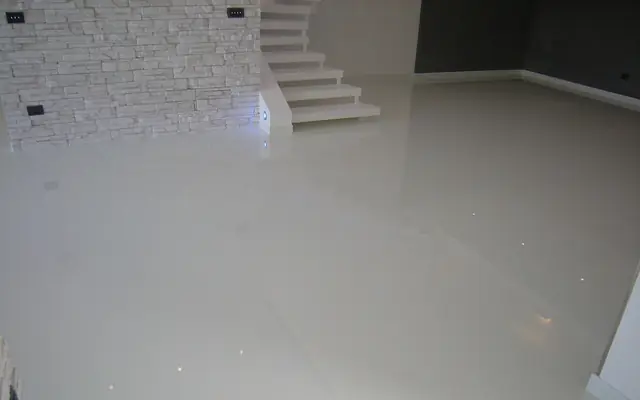
Epoxy flooring in Edina
Epoxy flooring is a two-part resin coating bonded to concrete, and it lasts only if the slab is ground, dried and repaired first. Census estimates for 2020-2024 date Edina's median home to 1971,[1] so a typical garage or basement slab is over 50 years old and needs inspection before coating.
Calls will be recorded.
Photo: "Pavimento in resina" by ARKdeko' Design, CC BY-SA 3.0, via Wikimedia Commons, adapted

Floors and prep work, in plain terms
Garage floor coating
How garage floor coating works on an Edina slab: cure times, the 50 F rule for cold garages, what moves the price and what to ask the installer.
Flake and quartz floors
Decorative epoxy flooring in Edina: flake systems and thicker quartz floors, what they are made of, slab needs, grip, topcoat costs and lifespan.
Metallic epoxy floors
A metallic epoxy floor in Edina: how pigment swirls form the epoxy marble look, why white epoxy floor shows flaws, and what the published price range covers.
Polyaspartic one-day coatings
Polyaspartic garage floor coating in Edina: back in use in about a day, UV stable, but sensitive to slab moisture.
Basement, kitchen and bath floors
Basement floor coating in Edina starts with moisture and radon.
Shop, warehouse and anti-slip floors
Self leveling epoxy floor basics for Edina shops, plus warehouse floor coatings and anti-slip textures: forklift wear, OSHA rules and wet-floor grip.
Concrete prep, crack repair and sealing
Preparing concrete for epoxy in Edina: grinding, silica dust rules, moisture tests, crack repair and when sealing the slab beats a coating.
Patios, driveways and steps
An outdoor epoxy floor for an Edina patio, explained: sun yellowing, freeze-thaw, slip risk and what installed prices cover, plus driveways and steps.
Last updated
What epoxy flooring actually is
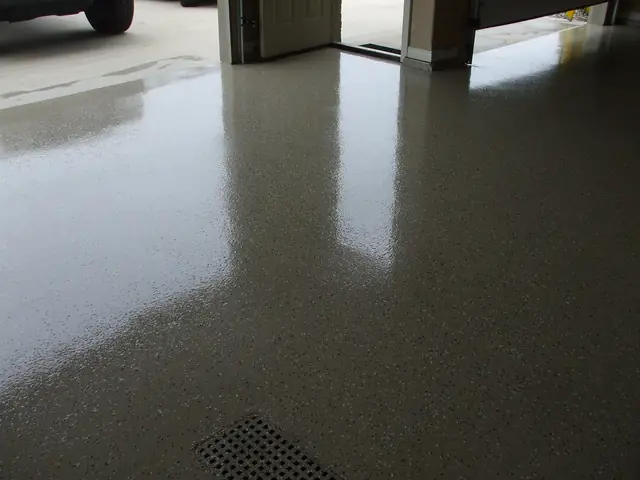
Think of epoxy flooring as a thin plastic skin that grips concrete. An epoxy system is made of a resin plus a curing agent, often called the hardener, and the two are mixed on site so they react and harden together.[2] Once cured, the coating is hard, glossy and easy to sweep or mop.
You will hear several names for the same family of products. Epoxy floor coating, epoxy floor painting and epoxy painting are all common phrases, and shoppers use them interchangeably. The differences matter more than the names suggest, though, so it helps to know what sits behind each label.
- Epoxy paint from a hardware store is usually a thin, roll-on product. It is the lightest-duty option and the most likely to peel under hot tires.
- A two-part epoxy coating is a thicker film that a flooring business applies after grinding the slab. This is what most people mean by an epoxy floor coating.
- A solid epoxy or self-leveling system is poured thicker still and is common in shops and commercial spaces.
Epoxy itself comes in three main types: water-based, solvent-based and solid. Decorative additives include mica or vinyl flakes, quartz blends and metallic pigments.[3] Water-based products tend to be the thinnest, and one published guide says they may need reapplying every one to three years. Meanwhile, solvent-based and solid floors can last up to 20 years.[3]
A word on safety. Liquid resin can irritate the eyes, nose, throat and skin, and some people develop skin allergies or asthma after heavy exposure.[2] The same health-department fact sheet says finished, hardened epoxy is practically non-toxic unless it is cut, sanded or burned.[2] In other words, the hazard is mostly in the mixing and application. That is one reason this is work for trained people with the right gear.
Have a floor in mind? Call and leave a voicemail, or send the form.
Calls will be recorded.
Why Edina floors need more than a quick coat
Edina is a mature suburb. The Census Bureau counts about 53,262 residents in roughly 24,071 housing units.[1] Of those units, 16,395 were built before 1980, which is about 68 percent.[1] Only 412 units date from 2020 or later.[1] That age profile tells an inspector a lot before anyone steps into a garage.
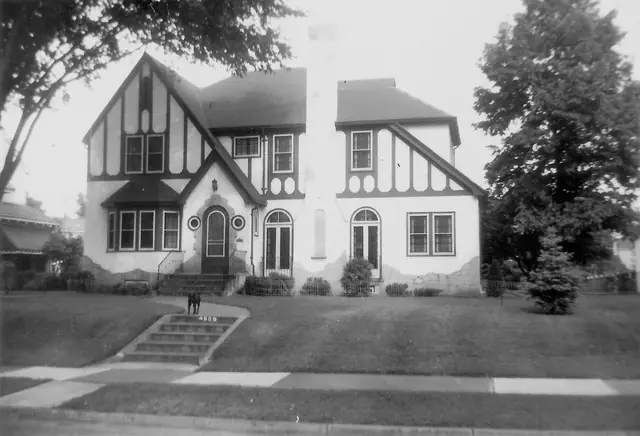
Older slabs bring older problems. Some were poured before vapor barriers were routine, many were finished with trowel passes that left a dense, slick surface, and many have decades of oil, tire marks and salt in them. A coating bonds to clean, profiled, dry concrete and fails on concrete that is none of those things.
The money at stake is real as well. Edina's median owner-occupied home is valued at $646,300,[1] and about 72 percent of occupied homes are owner-occupied.[1] A floor that peels in two winters is an annoying repair on a house like that, and a well-prepared floor is a modest upgrade that protects the slab underneath.
Detached houses are the most common home type here. About 54 percent of the housing units are detached houses,[1] and many have a garage, a basement or both. The median household income is $128,767.[1]
How a Minnesota winter treats a coated slab
A coated floor in this part of the country lives through a harsh annual cycle. The Twin Cities' normal January temperature is 16.2 degrees Fahrenheit, and the normal monthly temperature stays below freezing from December through February and only just above it in March.[4] Average yearly snowfall is 51.2 inches.[4]
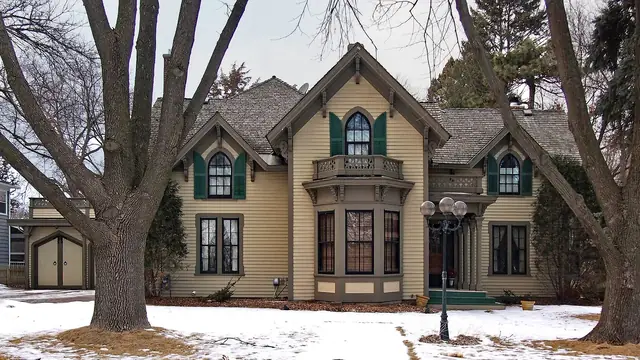

Snowy days can send salt into the garage. MnDOT spread 190,758 tons of salt on state roads in winter 2025-26, up from 141,489 tons the winter before.[5] Some of that rides home on your tires, melts off the wheel wells and soaks into the slab.
The Federal Highway Administration notes that chemical deicers make freeze-thaw damage to concrete worse.[6] On flatwork such as slabs, the most common deicer damage has been surface scaling.[6] A coating can help by sealing the surface, but only when the concrete beneath is sound. For the full story, read the road salt section of the garage floor page.
Cold also affects the job itself. Epoxy should not be applied below 50 degrees F, and a colder slab slows curing,[7] so an unheated Edina garage in January is a poor time to schedule a coating.
The kinds of epoxy flooring you can choose from
The work breaks into a handful of systems. Each has its own page with detail, and the overview of epoxy floor coating services shows how they fit together.
- Garage floor coating is a common request and covers standard one-, two- and three-car slabs, including road salt damage.
- Flake and quartz floors add decorative flakes for a speckled, forgiving finish, or broadcast quartz for a thick, gripping surface.
- Metallic epoxy floors use swirled pigments for a marble-like look, at $5 to $12 per square foot in published ranges.[3]
- Polyaspartic one-day coatings let people use the floor again within about a day.[7]
- Basement, kitchen and bath floors start with moisture and radon questions, then cover kitchen epoxy floors and coating over tile.
- Shop, warehouse and anti-slip floors cover self-leveling systems, warehouse floor coatings and anti-slip textures.
- Concrete prep, crack repair and sealing is the preparation every system depends on, plus concrete sealing for sound slabs.
- Patios, driveways and steps deal with sun, rain and freezing weather that garages never see, including driveway coatings and stairs.
Epoxy against polyaspartic, side by side
Table cells below are general comparisons, with the cited points drawn from the sources named.
| Feature | Epoxy | Polyaspartic |
|---|---|---|
| Return to use | Walk on after about 24 hours, vehicles after about a week[7] | Usable again in about a day[7] |
| Sunlight | Can yellow or fade if left to bake in direct sun | UV stable, suits sunny floors[7] |
| Moisture | Avoid on slabs with high moisture levels[8] | Cannot go on a floor with high vapor emission[7] |
| Typical use | Garages, shops, basements | Garages and quick-turnaround jobs |
Interior epoxy flooring beyond the garage
Interior epoxy flooring needs a little extra thought. A laundry room, a mudroom, a workshop in the basement or even a kitchen slab can be coated. The advantages are the same as in a garage: no grout lines, a wipe-clean surface and resistance to spills.
The tradeoffs differ, though. Indoor air matters, and EPA reports that concentrations of many volatile organic compounds are consistently higher indoors, up to ten times higher, than outdoors.[9] Paints and varnishes contain organic solvents that can release those compounds while they are used and, to some degree, in storage.[9] That is a reason to ask any installer how the area will be ventilated and which product they plan to use.
Slab-on-grade rooms also deserve a moisture check. A floor that looks dry on a July afternoon can still be passing vapor through the slab, and that vapor is what lifts coatings. The basement floor coating page goes through the testing methods in detail.
Preparation is where the job is won
If you remember one thing from this site, make it this: the coating is only as good as the prep. A typical garage job takes about a day for prep, a day to coat and a day to seal, and labor can be up to 65 percent of the price.[10] The materials are not the expensive part; the skilled hours are.


Grinding and profiling
Prep usually means mechanically grinding the surface so the coating has something to grip. That releases fine dust, and OSHA's silica standard sets a permissible exposure limit of 50 micrograms per cubic meter averaged over eight hours.[11] A handheld grinder used indoors needs a shroud and a dust collector, and the worker also needs a respirator if the grinding runs more than four hours in a shift.[11] A tidy, dust-controlled prep is a good sign about the business you hire.
Cracks and damage
Cracks, spalls and old pits need patching before coating, or they telegraph through the finish. The concrete grinding and crack repair page explains the difference between a hairline shrinkage crack and a structural movement crack, because the repair approach differs.
Moisture testing
New concrete is the classic trap. Standard specifications recommend at least a 28-day cure for new concrete before an epoxy or resinous coating, though that is only a guideline and the real wait can be much longer.[12] One manufacturer says moisture must be tested in several areas of a slab, because that is the only valid way to tell whether it is ready.[12] The tests it names include in-situ relative humidity probes, calcium chloride kits and a plastic sheet test.[12]
What a typical job looks like, day by day
Knowing the sequence makes it easier to judge a schedule. The three-day rhythm below is typical for a standard garage and is a general outline, not a promise from any particular business.
- Day one is prep. The floor is cleared, degreased and ground. Cracks and pits are filled, and dust is vacuumed away. Moisture readings are taken before or during this step.
- Day two is the coating. The base coat is mixed in small batches because it has a limited working time, rolled out and, if the system calls for it, broadcast with flakes while it is still wet.
- Day three is sealing. Excess flakes are scraped and swept off, and a clear topcoat goes on to protect the color and add wear resistance.
After that comes the wait. A garage epoxy floor can be walked on after about 24 hours, but vehicles should stay off for about a week until it cures fully.[7] If someone promises a floor you can drive on the next morning, ask which product they mean, because only the fast-curing polyurea and polyaspartic families are designed for roughly one-day return to use.[7]
Notice what is missing from that list: a quick wipe-down followed by a coat of paint. That shortcut is how many failed jobs start.
Choosing a finish that fits how you live
Color and texture are the fun part, but they carry practical consequences. A smooth gloss floor looks sharp and cleans easily, yet it can get slick when wet. Salty winter slush on a glossy surface is a good example. Many installers add a fine grit to the topcoat, or choose a flake system, to give shoes and tires more bite.
- Solid colors hide very little, so every spot of oil and every dust bunny shows. They suit a clean, minimal garage.
- Flake blends are the most forgiving. The speckled pattern hides dust, small scuffs and dried salt trails, which is why they are a popular choice in cold climates.
- Metallic finishes are dramatic and unique, because the pigments move before the coating sets. They work well in a showpiece basement or a recreation room.
- Light colors brighten a dim garage but show tire marks sooner. Mid-grays and tans are a common middle path.
Decorative flakes sell at about $10 per one-pound bag, and metallic epoxy runs about $5 to $12 per square foot according to a home-renovation magazine.[3] That is a sensible reminder that the finish you choose, not just the footprint, changes the bill.
Why coatings fail, and how to avoid it
Most failures come down to a short list of causes, and nearly all of them trace back to the first day.
- Poor surface preparation. Concrete that was only cleaned, not ground, gives the coating nothing to hold.
- Trapped moisture. High moisture in the slab can make epoxy bubble, peel or fail to bond, because the moisture gets trapped under the coating.[8]
- Cold slabs. Applying below the manufacturer's minimum slows curing and weakens the bond.
- Hot tire pickup. Tires that come in hot from the highway can soften and lift a thin coating. That is another reason to ask about thickness and topcoat.
- Untreated structural cracks. A crack that keeps moving will reopen no matter how hard the coating is.
If you see a bubbling or peeling coating on a neighbor's floor, it is usually one of these. Ask the installer you hire how each one will be handled on your slab, and expect a direct answer.
What it costs, in published ranges
Pricing depends on the floor, and this site never promises a number. What it can do is show what published sources say, so you can tell when something sounds too good or too high. The full breakdown is on the epoxy floor cost page.
- A home-renovation magazine, updated March 2026, puts contractor-installed epoxy at $3 to $12 per square foot including materials and labor.[3]
- A national home-improvement site, updated April 2024, says a typical garage costs $1,595 to $3,337, with an average of $2,441.[10]
- A national home-improvement site also puts polyaspartic coating at $4 to $9 per square foot.[13]
- A home-services marketplace, updated July 2026, reports a national range of $1,703 to $3,280 for an epoxy garage floor.[14]
Those are national averages, not Edina prices. What moves a number is the slab condition, the size, the system, the amount of crack repair and whether moisture mitigation is needed. If a moisture barrier is required under a polyaspartic coating, one source says it could add about $1 per square foot.[13]
Permits, licenses and what Minnesota says
Most homeowners ask whether a floor coating needs a permit. Minnesota's state building code exempts painting, papering, tiling, carpeting, cabinets, countertops and similar finish work from a building permit. Floor coatings are not named in that list, so the rule suggests asking the Edina building department to confirm.[15] A permit exemption never allows work that violates the code or other laws.[15]
Licensing is its own question. Minnesota exempts specialty contractors who provide only one special skill from the residential contractor license requirement,[16] and contractors whose gross annual receipts for specialty skills stay at or below $15,000 are also exempt once they obtain a certificate of exemption.[16] The Department of Labor and Industry cautions that if an unlicensed contractor is hired and a loss occurs, the Contractor Recovery Fund is not available.[17]
The regulations page walks through these rules, the lead-safe renovation requirement for older homes and the red flags the state lists.
Questions for a floor coater before you sign
You do not need to be an expert to run a good interview. Ask these and listen for specific answers rather than slogans.
- How will you prepare the slab, and will you grind it?
- How will you test moisture, and what will you do if the result is high?
- Which product system will you use, how many coats, and what is the cure time?
- Who is pulling any permits, and what is the schedule?
- What is the payment schedule, and when do I get lien waivers?
The Department of Labor and Industry lists several contractor red flags, including requiring full or substantial payment before work, refusing a written contract and asking the homeowner to get the permits.[17] It suggests a contract that covers who pulls permits, start and completion dates, a change-order clause and a payment schedule with only a modest down payment.[17] Before final payment, get full and final lien waivers from each subcontractor and supplier.[17]
If you are weighing a do-it-yourself project, the kit versus professional answers compare the real tradeoffs.
Basement floors, moisture and radon
Basement slabs sit in direct contact with soil, and the Minnesota Department of Health recommends that every Minnesota home be tested for radon.[18] The department says radon is found at elevated levels in about 40 percent of the state's homes.[19] It enters through cracks in the slab, floor-wall joints and open sump pits.[18]
A coating is not a radon system. EPA's radon-resistant guidance does include sealing cracks and openings in the foundation floor with polyurethane caulk. It is only one part of a system that also includes venting.[20] The sensible order is to test first, mitigate if needed and coat afterward.
The health department's follow-up rules depend on the reading: under 2 picocuries per liter, retest in 2 to 5 years. From 2 to 7.9, do a long-term test; at 8 or more, do a short-term follow-up.[21] For the coating side of the question, see the basement page.
Leftovers, cleanup and disposal
Leftover epoxy is handled differently from latex paint. The state pollution agency's paint-collection list names deck and floor coating among acceptable waste paints, while epoxy, glue and adhesive appear on the unacceptable list.[22] That fact sheet tells metro-county sites, including Hennepin, to contact county staff because requirements may differ.[22] MnDOT's own guidance treats waste epoxy paint as hazardous waste.[23]
A reputable installer carries away what is left and tells you where it goes. Ask about it in advance, because disposal is a part of the job that is easy to forget until the buckets are sitting in your driveway.
Edina neighborhoods and where the work happens
Edina has a lot of character from one end to the other. Neighborhoods named in published sources include Highlands, Indian Hills, Morningside, the Country Club District, Cahill Village, Chapel Hill, South Harriet Park, Interlachen, Rolling Green, Presidents, Sunnyslope, White Oaks, Parkwood Knolls, Braemar Hills, Birchcrest, Dewey Hill and Hilldale.[24] The city covers about 15.97 square miles and is more than 95 percent developed.[24]
That mix matters because slab age and exposure vary. A 1950s rambler, a 1970s split-level and a newer build will each have a different floor underneath. A good inspector reads the slab first and picks a product second.
How long a coated floor lasts
Longevity depends on the system and on what happens afterward. Heavy use, salt, hot tires and poor prep all shorten it. Published guidance suggests solid and solvent-based epoxy can last up to 20 years, while thin water-based products may need reapplication within one to three years.[3]
Cleaning habits help. Rinse salt off the floor in late winter, use a soft push broom, avoid harsh solvents and place a mat under a leaking car. None of this is difficult, and all of it protects the coating you paid to have installed.
Where to go next
If you are still deciding what you want, start with the services overview and then read the cost page. If you have rules or permit questions, the regulations page covers them. The common questions page answers the shorter ones, including kit versus professional, and the road salt section goes deeper on winter damage.
Ready to plan your floor? Leave a voicemail or send the form, and the operator replies.
Calls will be recorded.
Sources
- U.S. Census Bureau (ACS 2024 5-year, via Census Reporter). American Community Survey 2020-2024 5-year estimates for Edina city, MN (served by Census Reporter API), accessed November 23, 2026
- California Department of Public Health. Epoxy Resin Systems fact sheet (HESIS), 1989-06
- This Old House. How Much Does Epoxy Flooring Cost?, March 13, 2026
- Minnesota Department of Natural Resources State Climatology Office. Twin Cities normals: 1991-2020 compared to 1981-2010, May 6, 2021
- Minnesota Department of Transportation. Winter Maintenance Report, accessed November 23, 2026
- Federal Highway Administration. Chemical Deicers and Concrete Pavement: Impacts and Mitigation (Tech Brief FHWA-HIF-17-008), 2018-03
- ConcreteNetwork.com. What's the Best Concrete Garage Floor Coating? Epoxy, polyurea, or polyaspartic, accessed November 23, 2026
- Synchrony. How Much Does Epoxy Flooring Cost?, April 20, 2026
- U.S. Environmental Protection Agency. Volatile Organic Compounds' Impact on Indoor Air Quality, accessed November 23, 2026
- Bob Vila. Epoxy Garage Floor Cost, April 26, 2024
- OSHA standard, text hosted by Cornell Legal Information Institute. 29 CFR 1926.1153 Respirable crystalline silica, accessed November 26, 2026
- Sherwin-Williams. How Soon Can You Epoxy Coat Freshly Poured Green Concrete?, accessed November 23, 2026
- Bob Vila. Polyaspartic Floor Coating Cost, January 31, 2024
- Thumbtack. How much does an epoxy garage floor cost?, July 1, 2026
- Minnesota Office of the Revisor of Statutes. Minnesota Rules 1300.0120 Permits, accessed November 23, 2026
- Minnesota Office of the Revisor of Statutes. Minnesota Statutes 326B.805 Licensing requirements, accessed November 23, 2026
- Minnesota Department of Labor and Industry. A consumer's guide to Hiring a Residential Building Contractor, accessed November 23, 2026
- Minnesota Department of Health. Radon in Homes, accessed November 23, 2026
- Minnesota Department of Health. News release: radon testing during home real estate sales (page dated Jan. 13, 2025; listed in MDH's 2026 releases as Jan. 13, 2026), January 13, 2026
- U.S. Environmental Protection Agency. Radon-Resistant Construction Basics and Techniques, accessed November 23, 2026
- Minnesota Department of Health. Radon test results, accessed November 23, 2026
- Minnesota Pollution Control Agency. Architectural Paint: Management for paint collection sites (w-hw4-37b), 2016-03
- Minnesota Department of Transportation. Management of Paint Wastes, accessed November 23, 2026
- Wikipedia. Edina, Minnesota, accessed November 23, 2026